FRAIL-bots
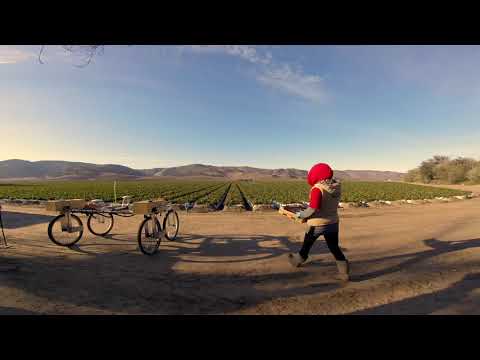
Hand harvest of fresh-market fragile crops is one of the hardest mechanization problems in U.S. fruit and vegetable production. Labor can be as much as 60% of variable cost, and shortages have meant lost production. Conventional mechanical and robotic harvesters have not matched the judgment, dexterity, and speed of experienced crews at a competing cost. Conveyors and platforms reduce the walking that comes with carrying fruit to a loading station, but adoption has been slow: they are expensive, awkward to move between fields, need a skilled driver, and often trade ergonomics for speed.
This project laid the groundwork for teams of small, relatively inexpensive harvest-aiding robots. The co-bots bring empty containers to pickers and carry full ones to unloading stations. Together they are meant to be an easy-to-deploy transport system that raises productivity, safety, and ergonomics with as few robots as possible.
The approach treats manual harvesting and container transport as the production and materials-handling functions of a flexible manufacturing system. Stochastic models of picking and of the robot fleet are written so they can be optimized numerically. A model-predictive dispatcher uses crop yield and work patterns to anticipate where transport will be needed, and matches fleet capacity to that demand. The same idea extends to other labor-intensive specialty crops and to logistics in highly mechanized ones.